
What does iGaming mean? The simple definition
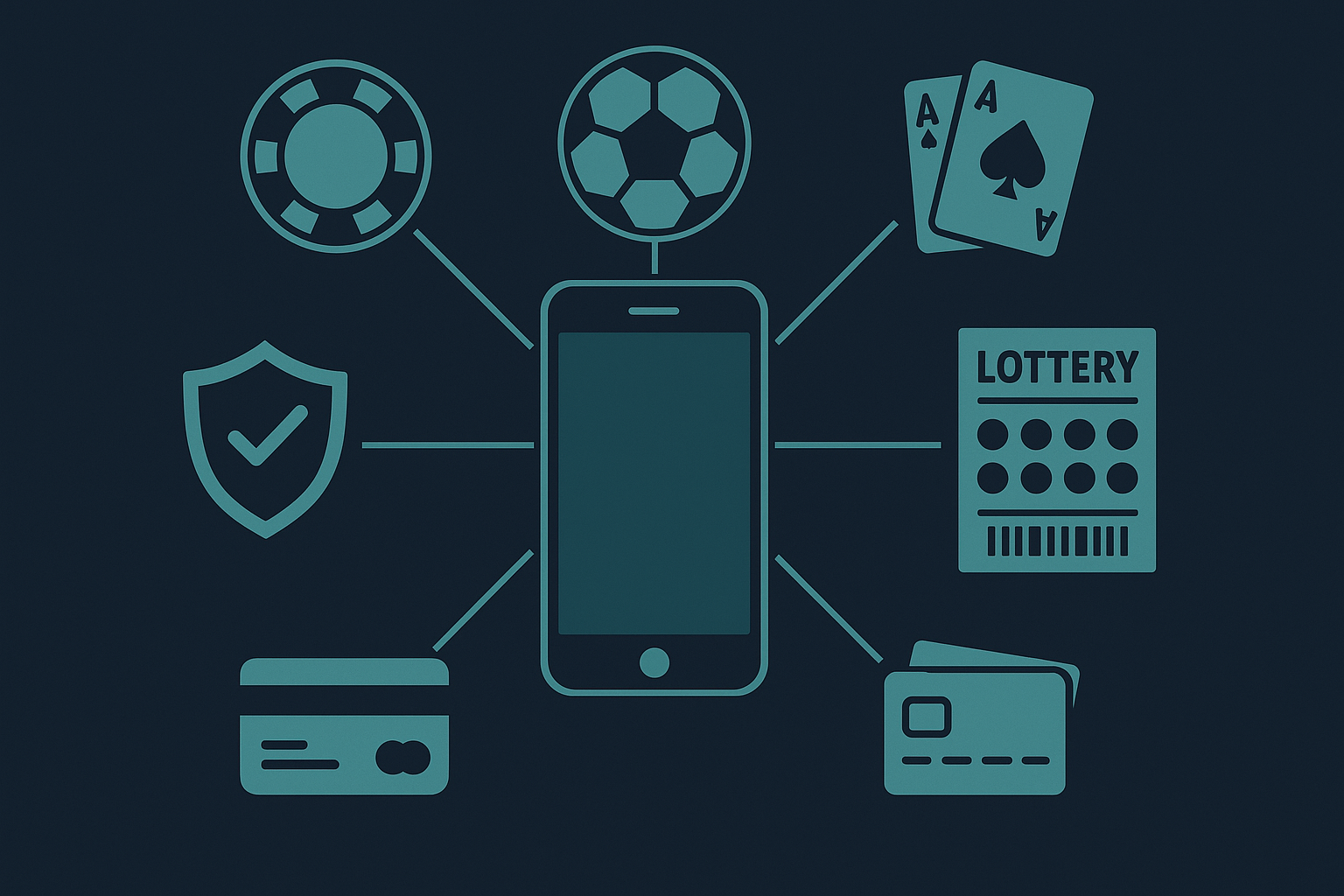
iGaming is real-money gambling delivered over the internet: online casino games, sports betting, poker, lottery and bingo played through websites and mobile apps instead of a physical venue. That’s the whole answer to what is iGaming in one sentence. Everything else is detail about which products count and who builds them.
The “i” is just shorthand for internet, the same prefix that gave us a wave of late-1990s and 2000s product names. The term grew up on the business side of the sector in Europe, which is why you’ll see it constantly in trade press, conference names and job listings, and almost never in a player’s vocabulary. Nobody says “I’m going to do some iGaming tonight.” They say they’re playing blackjack online.
Scope matters, though, because iGaming usually refers to the whole commercial ecosystem, not only the act of betting. When someone says they work in iGaming, they might build slot math, process payments, run affiliate marketing, or write compliance reports for a licensing regulator. One wrinkle for US readers: state regulators and analysts often use “iGaming” narrowly to mean online casino gaming, reported separately from online sports betting. Context tells you which definition is in play.
iGaming vs online gambling vs betting: what’s the difference?
Is iGaming gambling? Yes. In everyday use, iGaming and online gambling mean the same thing, and betting is one segment inside it. The differences are about register and scope rather than substance.
| Term | What it covers | Who uses it |
|---|---|---|
| iGaming | The full internet gambling sector, including B2B suppliers, platforms and payments. In US regulatory reporting, often means online casino only. | Operators, suppliers, recruiters, trade media, analysts |
| Online gambling | Any real-money wagering over the internet. Broadly interchangeable with iGaming in plain speech. | General press, regulators, researchers, the public |
| Betting / internet betting | Wagering on an outcome, most often sports, horse racing or novelty markets. A segment of iGaming, not a synonym. | Bettors, sportsbooks, sports media |
| Online casino | Slots, roulette, blackjack, baccarat and live dealer tables. Another segment of iGaming. | Players, casino operators, game studios |
Two things iGaming is not. It isn’t esports, which is competitive video gaming (though betting on esports matches is iGaming). And it isn’t social casino or sweepstakes-style play where you can’t stake or cash out real money in the conventional sense. “Digital gaming” muddies things further because in most of the world that phrase means video games, so avoid it unless you define it.
The main types of iGaming
Four segments account for the bulk of the industry. Most large brands run more than one, and the products behind them are usually built by different specialist suppliers.
Online casino games
Slots, roulette, blackjack, baccarat, video poker, game shows and live dealer tables. Outcomes on digital games are produced by a random number generator (RNG), which makes every round independent of the last, and each game publishes an RTP, the long-run percentage of total wagers it returns to players. A 96% RTP means roughly $96 returned per $100 wagered averaged over millions of rounds, leaving a 4% house edge. That edge is the business model, and it applies over the long run rather than to any single session.
Sports betting
Wagering on sporting outcomes: point spreads, moneylines, totals, player props, parlays and in-play (live) bets placed while the game is running. The sportsbook prices markets with a built-in margin, sometimes called the overround, which is its equivalent of the house edge. Daily fantasy sports and horse racing wagering are usually tracked alongside this segment.
Online poker
Cash games and tournaments where players compete against each other rather than the house. The operator takes a cut, the rake, from pots or tournament entry fees. Poker is liquidity-dependent, which is why US player pools are shared across some states through interstate compacts, and why a state going live alone often struggles to fill tables.
Digital lottery and bingo
State lottery draw tickets and instant-win eInstants sold online, plus online bingo rooms. In the US this side is often run by or under contract to a state lottery, which makes it structurally different from a commercial casino brand: the state is the operator and a supplier runs the technology.
How the iGaming industry works: the key players
Think of the gaming ecosystem as a supply chain. The brand on the app is only the last link.
Gaming operators (the brands players know)
Operators hold the licence, own the customer relationship, take deposits, set bonuses and pay withdrawals. They’re the B2C layer: DraftKings, FanDuel, BetMGM, Caesars, bet365 and the rest. Some build a lot of their own technology; many license most of it and compete on marketing, pricing and retention.
Platform and software providers
This is B2B gaming, and it splits in two. Platform providers supply the account system, wallet, bonus engine, sportsbook trading and back office an operator runs on. Game studios supply the content: slot and table game developers, plus live dealer studios that stream real dealers from purpose-built facilities. A single online casino lobby typically aggregates games from dozens of studios through an aggregation layer.
Payment and tech infrastructure
Deposits and withdrawals move through card networks, ACH and bank transfer, digital wallets and prepaid products, with payment service providers sitting in the middle. Alongside them are the services that make regulated markets workable: geolocation checks that confirm a player is physically inside a legal state, identity and age verification (KYC), anti-money-laundering screening, responsible gambling tools, and independent testing labs that certify RNGs and game math before launch.
Affiliates and marketing partners
Affiliates are publishers, comparison sites and content creators who send traffic to operators and are paid per acquired player or on a revenue share. Media partnerships, league and team sponsorships, and data suppliers who feed live sports odds round out the commercial layer. Sitting above all of it are the regulators, state gaming commissions in the US and bodies such as the UK Gambling Commission or the Malta Gaming Authority elsewhere, which license every participant and set the rules on advertising, player funds and game fairness.
Real-world examples of iGaming
Concrete examples of iGaming that most US readers will already recognise:
- Placing a same-game parlay on an NFL Sunday through a sportsbook app.
- Playing online slots or a live dealer blackjack table in New Jersey, Michigan or Pennsylvania, where online casino gaming is legal and regulated.
- Entering an online poker tournament on a state-licensed poker site.
- Buying a Powerball ticket or an instant-win game through a state lottery’s own app.
- A studio like Evolution running a live roulette table that appears inside a dozen different casino brands at once, which is why the same games show up across competing apps.
As of now, online sports betting is live in roughly three dozen states plus Washington, D.C., while full online casino gaming is legal in a much smaller group: Connecticut, Delaware, Michigan, New Jersey, Pennsylvania, Rhode Island and West Virginia. The map changes with each legislative session, so check your own state’s regulator before assuming a product is available where you live.
How big is the iGaming industry?
Big and growing faster than the land-based side. The American Gaming Association’s revenue tracking puts total US commercial gaming revenue in the tens of billions of dollars a year, with online sports betting and online casino the two fastest-expanding categories since the Supreme Court struck down the federal sports betting ban in 2018. Online casino gaming is the smaller of the two by number of legal states but generates strong revenue per state, because slots and tables run year-round rather than following a sports calendar. For current figures, the American Gaming Association publishes quarterly and annual commercial gaming revenue data, and individual state regulators publish monthly reports.
Globally, the picture is fragmented by regulation rather than demand. Europe has mature licensed markets, the UK combines a long-standing licensing regime with tightening advertising and affordability rules, and parts of Asia and Latin America are opening up, with Brazil the most watched recent example. Growth in the sector tracks legislation more than technology: when a market regulates, revenue that already existed offshore moves onshore and becomes measurable.
One compliance note worth keeping in view: legal iGaming only exists inside licensed, age-restricted markets, and every regulated operator is required to offer deposit limits, session limits, cool-off periods and self-exclusion. Gambling has a mathematical house edge, which means it costs money over time. Treat it as paid entertainment, never as income. If it stops feeling like entertainment, use the operator’s limit tools or contact a helpline such as 1-800-GAMBLER.
FAQ
What does iGaming mean?
iGaming means real-money gambling conducted over the internet, along with the businesses that supply it. The “i” stands for internet. It covers online casino, sports betting, poker, lottery and bingo.
Is iGaming gambling?
Yes. iGaming is the trade term for online gambling. In US state reporting it is often used more narrowly to mean online casino gaming, separate from online sports betting.
What are iGaming examples?
Betting on an NBA game in a sportsbook app, spinning online slots at a licensed casino site, joining an online poker tournament, or buying a lottery instant-win game through a state lottery app.
How does iGaming work?
A licensed operator runs a site or app on platform software, fills it with games from third party studios, verifies each player’s age, identity and location, processes deposits and withdrawals through payment providers, and reports to a regulator that audits the games and the money.
Is iGaming the same as esports?
No. Esports is competitive video gaming. Betting on esports matches with real money is iGaming, but playing a video game competitively is not.